Size vs. Condition: What 4th Place at Mr. Universe Taught Me
Summary
- I outweighed every man in my lineup at Mr. Universe Thailand and placed 4th
- Judges reward condition: dryness, muscle separation, and posing that displays both
- Size without condition caps your placing because judges compare detail, not volume
- Phase 2 is built on that lesson: ~3,650 kcal, double Push/Pull/Legs, fasted cardio, daily posing practice
- Protein stays locked around 250 g with refeeds every 7-10 days so the size stays
Three weeks ago I stood under the lights at Mr. Universe Thailand and took 4th place in Master's Bodybuilding. At 53 years old, twenty years after a heart attack that should have been the end of the story. I already wrote the full recap of that night. This article is about the lesson.
Because here is the uncomfortable fact of that show: I was the biggest man on that stage. Not arguably. Visibly. And three men beat me.
Once you understand why, you understand how bodybuilding is actually judged. And if you are a big guy who has been hiding behind his size, this applies to you whether you ever pin a number on your trunks or not.
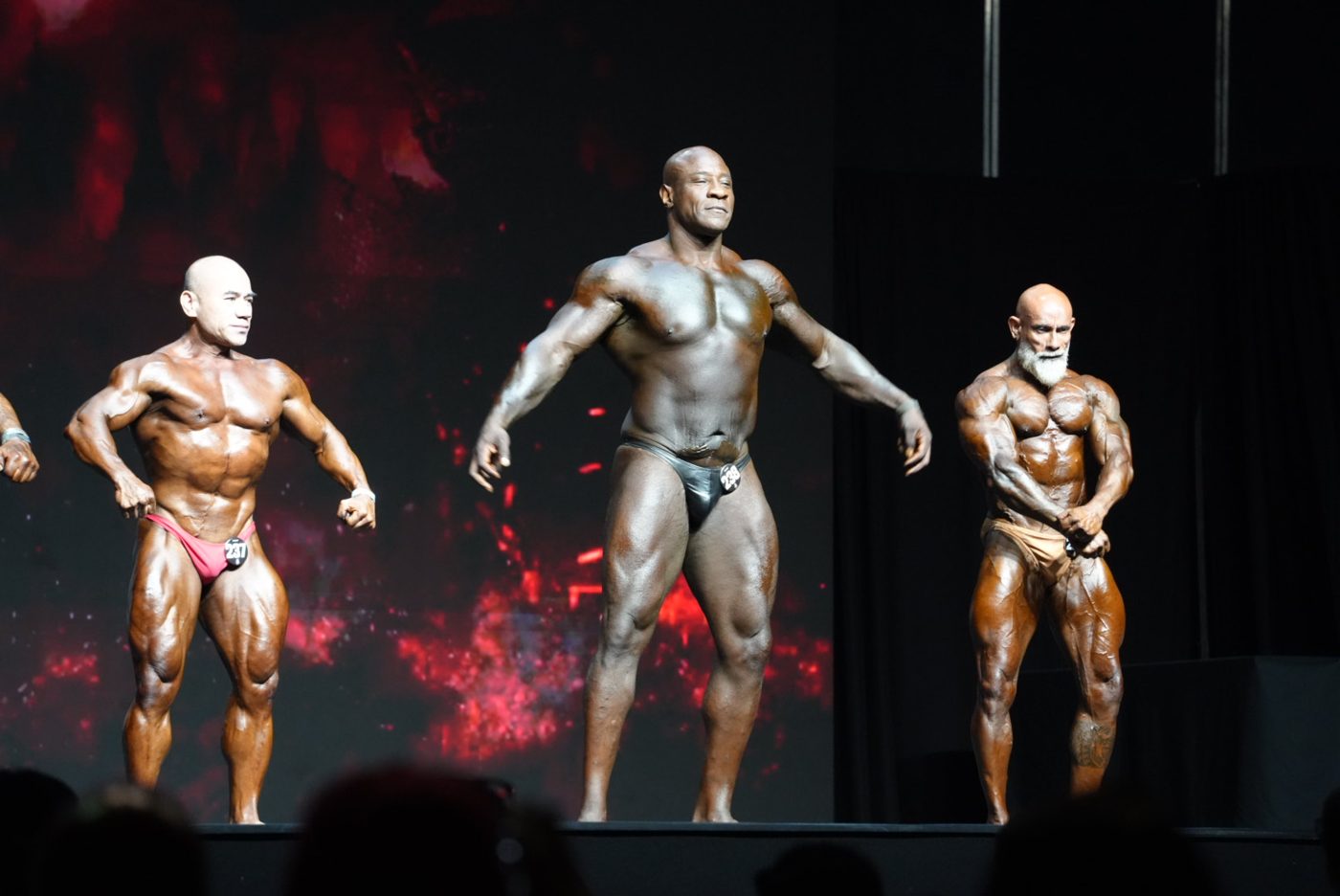
I Was the Biggest Man on That Stage. I Took 4th.
Let me kill the excuse-making before it starts. The judges got it right. The men who placed ahead of me showed up dry, separated, finished. They earned those placings, and I shook their hands backstage and meant it.
But the fact that matters for this article is this: mass was never my problem. I walk around at 308 pounds. Side by side in that lineup, I was carrying far more muscle than the men who beat me. If bodybuilding were scored by the pound, there would be a trophy on my shelf right now.
It is not scored by the pound. The sport rewards the razor. Size gets you noticed when you walk out. Condition decides where you stand when they hand out the hardware. I said it in the recap and I will keep saying it: size gets you noticed, condition gets you crowned.
What Conditioning Actually Means
People throw the word around like it just means "lean." It is more specific than that. When a judge says condition, he is scoring three things he can see from the table.
Dryness. No layer of water sitting between skin and muscle. A dry physique looks carved out of something hard. A watery one looks inflated, even at low body fat. You can diet down to a decent body fat number and still show up smooth because of water, and the judges will score what they see, not what your scale said.
Separation. The lines between muscle groups. Delt splitting off the pec. Triceps detail you can count. Quad sweep with the heads visible. Hamstring biting into glute. Separation is what makes a physique look built instead of just big. It only shows up when body fat and water are both low enough for light to catch the edges.
Posing that shows it. Condition does not score itself. You have to hold each pose hard and steady, long enough for the judges to see the detail. A conditioned physique with lazy posing loses to a lesser physique presented properly. That one gets its own section below, because it cost me too.
That is the whole word. Dryness, separation, and the presentation that makes both visible from thirty feet away under harsh light.
Why Size Without Condition Caps Your Placing
Here is the judging math nobody explains to big guys.
Judges do not measure you. They compare you. And in a side-by-side comparison, detail beats volume every time. Under stage lights, at distance, a smooth 300-pounder actually reads smaller than a shredded man 60 pounds lighter, because light needs edges to catch and smooth has no edges. My size advantage was real, but a chunk of it was invisible from the judging table because it was not conditioned enough to display.
There is a second reason, and it is the one that stung: condition is proof of work. Getting big takes years, but those years can be sloppy. Getting shredded for a specific date takes a prep executed without a weekend off, and every judge on that panel knows it. Smooth reads as unfinished. When a judge sees size without condition, he does not see a monster. He sees a prep that ran out of runway. That caps your placing no matter what you are carrying underneath.
Twelve weeks was what I had, starting from 140 kilos, my first full prep under Tony Huge's protocols. The frame showed up. The razor did not, not all the way. That is not a complaint. That is a diagnosis, and you can act on a diagnosis.
Posing: The Part of Conditioning Nobody Practices
On a scorecard, condition and posing are separate ideas. On stage, they are the same score.
Holding a front lat spread hard while depleted is cardio. Holding it at 53, at my size, after a morning of pump-up sets backstage, is a different sport entirely. Every second you shake or let the midsection go, the condition you dieted for stops being visible. And the judges are watching between the mandatories too. The man who stands relaxed but tight while the guy next to him slumps is winning points during what everyone thinks is downtime.
The men who beat me did more than arrive drier. They delivered it. Every transition rehearsed, every hold steady. That is weeks of daily practice, and it shows the same way a missed leg day shows.
So posing practice is now on my schedule every single day, right after training, starting with 20 minutes and building up. Not because I enjoy it. Because 4th place taught me that the last piece of condition is delivered, not dieted.
What Changes in Phase 2
The judges told me exactly what stands between me and a trophy, and it is the one variable fully in my control. So Phase 2 is built around a single sentence: keep the size, find the condition.
The complete breakdown has its own article, but here is the shape of it:
- Calories drop from ~4,000 to ~3,650. The 350 comes out of carbs in non-training windows only. Training-window carbs stay, because the workouts fund the size I am keeping. The food itself is laid out on the meal plan page.
- Protein stays locked around 250 grams. At my age that is the macro you never touch. 1 to 1.2 grams per pound, every day, cut or no cut.
- Training goes to double Push/Pull/Legs. Six training days, one full rest day. Every body part twice a week while the calories slide down.
- Steady-state fasted cardio. Low heart impact, by design. I train twenty years after a heart attack with a doctor reading my bloodwork every 8 weeks, so there will be no HIIT heroics. Slow, early, consistent.
- Refeeds every 7 to 10 days. The insurance policy against a stalled metabolism and shrinking muscle. The cut is supposed to be boring. Boring keeps size.
- Sleep 8 to 9 hours. Recovery is where the fat loss actually gets signed off. Non-training hours are still training.
- Posing every day. See above. The lesson gets a line item.
The architecture underneath is the same one that got me to the stage, the 14-week competition prep protocol, pointed at a new target. Same people too: Jordan and Kelly build the plan, my doctor reads the labs, Tony Huge keeps me honest, and I execute. If you want to see what execution looks like at ground level, I documented a full day in my life at Muscle Factory Pattaya. Phase 2 runs on that same clock, with tighter food.
And it all happens in public. One raw reel a day on Instagram, filmed between sets, no polish. If the condition comes, you will watch it come. If it stalls, you will watch that too. That is the deal I made when I started documenting this comeback.
If You Never Step on Stage, This Is Still Your Lesson
Most guys over 40 in a gym are me before June 28. Permanent bulk. Big arms in a hoodie. "Cutting after the holidays" for the third straight year. Size without condition, indefinitely.
The mirror judges the same way a panel does. Detail beats volume. The strongest guy at your gym at 20% body fat looks worse on the beach than a disciplined man forty pounds lighter, and deep down every big guy knows it. Size is comfortable to chase because eating is easy and the scale always cooperates. Condition is uncomfortable to chase because the scale stops flattering you and the work gets quiet and repetitive.
You do not need a show. You need one honest phase where you keep your strength, strip the fat, and find out what you actually built underneath. That is what I am doing right now, in public, at 53, at 308 pounds, with more cardiac history than anyone should carry into a cut, which is exactly why mine is supervised and slow.
The judges did me a favor. They put a number on the gap. Fourth means the frame is done and the razor is next.
That's the X factor. I'm XFACTOR.
Frequently Asked Questions
What does conditioning mean in bodybuilding?
Conditioning is the combination of dryness and muscle separation: low body fat plus minimal water under the skin, so the lines between muscle groups and the detail inside them are visible under stage lights. It is always judged relative to the other men in the lineup.
Do bodybuilding judges reward size or conditioning more?
Both matter, but when physiques are compared side by side, conditioning usually decides the placing. A smaller, shredded competitor beats a bigger, smooth one at almost every level of the sport. Size gets you into the comparison. Condition decides where you finish in it.
How do you improve conditioning without losing muscle size?
Use a small calorie deficit taken from carbs around non-training windows, keep protein locked around 1 to 1.2 grams per pound of bodyweight, keep training heavy, use steady-state cardio instead of crash cardio, refeed every 7 to 10 days, and sleep 8 or more hours. A slow, boring cut is what preserves the size.
Why does posing matter for conditioning?
Judges can only score what they can see. Holding the mandatory poses hard and steady is what makes dryness and separation visible from the judging table. A well-conditioned physique with weak posing routinely loses to a lesser physique that is presented better.